Te Tapairu Hirahira Ō Kahakaharoa: Te Pou Niua (Niwa, Niniwa)

Te Arikitanga Ō Hawaiki, Tuputupu-whenua, Kupe-Ariki, Nukutāwhiti and the Transfer and Preservation of the mana Arikitanga to Te Hokianga Nui Ō Kupe
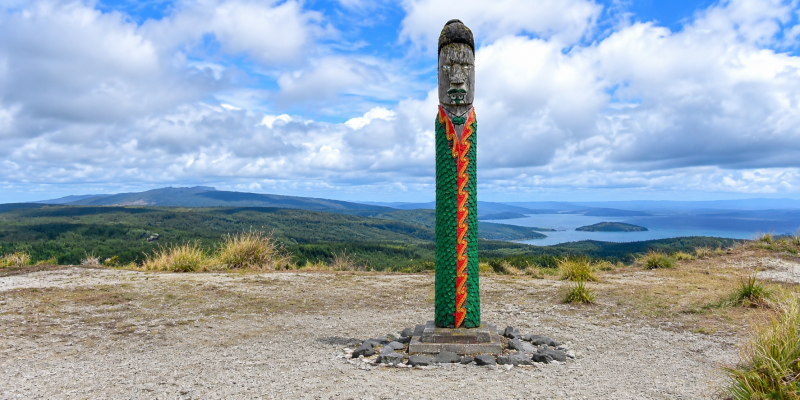
The plaque and Pou Niua, Niwa, Niniwa is of considerable ancestral, historical and constitutional significance. When we examine the wording of the inscription alongside the traditions of Kupe-Ariki (Matawhaorua), who represents all ten Kupe of Hawaiki and Aotearoa, Nukutāwhiti (Ngātoki-mata-hou-rua), Ngāhue (Tāwhirirangi), Ruanui ā Tāne (Māmari) and Whakatau Pōtiki (Māhūhūkiterangi), the arrival of Ngātoki-mata-hou-rua and the bones of Wāhieroa, we begin to understand a much deeper account of Kōpū Ariki and Arikitanga (Royal Polynesian Heritage) — its inheritance, its recognition, its maintenance, its protection and its transfer to Hokianga.
What this plaque confirms, in my interpretation, is that both Kupe-Ariki and Nukutāwhiti were born and raised within the knowledge, understanding and traditions of Arikitanga from Rarotonga, Maupiti and Ra'iatea, and Te Moana Nui ā Hīva. They were not simply navigators, waka builders, warriors or explorers. They were tūpuna who understood the authority, responsibilities, protocols and ancestral foundations of Arikitanga. We must also remember the tradition concerning Nukutāwhiti bringing the bones of Wāhieroa from Hawai'i after departing Ra'iatea. Upon this return, Ngātoki-mata-hou-rua was made tapu and was not permitted to carry food. This waka called upon supernatural power and sailed from the Pacific Ocean to Aotearoa in three days. This is an important detail, because it demonstrates that the waka was operating within a sacred and highly prescribed ancestral framework. Its journey was not simply a voyage of transportation or migration. It carried obligations associated with IO, whakapapa, tapu, ancestral remains and the authority of Arikitanga. Kupe-Ariki brought Te Whare Atua Ō IO Atua Ariki Tapu and Tītoremāhutu-rangi his Whare Wānanga.
Nukutāwhiti brought the bones of Wāhieroa, and the red and yellow pītau hakarei as a symbol of Kōpū Ariki and Arikitanga from Hawaiki. Ruanui, Ngāhue and Whakatau Pōtiki also brought special provisions that add to the uniqueness of the waka that arrived in and near Te Puna I Te Ao Mārama and Te Hokianga Nui Ō Kupe. The bones of Wāhieroa are the spiritual takapau or woven mat that all things sit upon.
THE PĪTAU, THE ARIKI FEATHERS AND THE PRESERVATION OF ARIKITANGA
One of the most significant references on the plaque is Nukutāwhiti's declaration concerning the two pītau. The inscription records:
"Ka whiua e ahau enei pītau e rua ki uta, hei pupuri i te mana Arikitanga, hei tohu whakamaharatanga ki au. Ka herea kōrua ki te Kaitiakitanga o Hokianga."
"I shall cast these two pītau ashore, to preserve the authority and mana of the Arikitanga, and as a lasting memorial to me. I bind you both to the guardianship of Hokianga."
The reference to the pītau is particularly important. My interpretation is that these pītau refer to the red and yellow Ariki feathers worn by Ariki as insignia of their ancestral standing and authority in Hawaiki — particularly in the Ariki headdress, the tātua (girdle) and the rākei (feathered poncho). We must therefore consider what Nukutāwhiti was actually doing when he removed these feathers from his headdress and cast them ashore. This was not simply an act of remembrance. It represented the preservation, reinstatement and transfer of the mana Arikitanga into the guardianship of Hokianga. The wording is important.
Nukutāwhiti identifies the two pītau as "Ko taku Heke-Tahuhu" and "Ko taku Heke-Takere," and he further connects them to Te Kāhui Ao and Te Kāhui Pō. The ridgepole and the keel. The heke-tahuhu is the descent line — the vertical axis of whakapapa running down from IO through the Ariki lines. The heke-takere is the voyage line — the horizontal axis of the journey across Te Moana Nui ā Hīva. By binding both to the Kaitiakitanga of Hokianga, Nukutāwhiti transferred the complete Arikitanga: the bloodline and the journey, the standing and the story. That is not a gift. That is a transmission. Te Kāhui Ao and Te Kāhui Pō extend that transmission across both realms — the world of light and the world of darkness — so that nothing is left outside it. These references establish a relationship between ancestral descent, the foundations of authority, the worlds of light and darkness, and the continuation of Arikitanga: IO, Kupe-Ariki, Puhimoanaariki, Rāhiri, to 1835. The pītau become tohu maumaharatanga — enduring ancestral memorials that preserve the knowledge and authority of Arikitanga for those who follow.
We must also remember that the mana, the mauri and the tapu of Te Whare Atua Ō IO, Te Whare Ō Kupe-Ariki and Te Whatupungapunga Ō Nukutāwhiti were held within the sacred pītau, the feathers and plumes that came from Hawaiki. These were not simply ornamental objects. They carried the ancestral authority, spiritual responsibilities and sacred significance associated with the Arikitanga. The sacred pītau must therefore be understood within the wider ancestral architecture of the original Whare and the authority they held.
TE HOKIANGA NUI Ō KUPE — NOT Ā KUPE
There is another important distinction in the wording of this plaque that deserves careful consideration. It says: Te Hokianga Nui Ō Kupe. It does not say: Te Hokianga Nui Ā Kupe. This distinction is significant to my understanding of the ancestral traditions. The use of Ō Kupe establishes the return of the kōiwi of Kupe to Hokianga in August 2024 and January 2026. It identifies Hokianga through the ancestral association and belonging expressed by Ō Kupe. Te Whare Tangata, Te Ūkaipō. These words act as a prophecy of events that have now come to pass. The Pou Niua was unveiled in the year 2000, which means the inscription preceded the first repatriation of Kupe-Ariki in August 2024 by twenty-four years, and the second in January 2026 by twenty-six years. That gives this Pou a strong position of prophetic timing — the elders named the return of Kupe to Hokianga a generation before it happened.
By contrast, the use of Ā Kupe would indicate a different grammatical relationship. Ā Kupe speaks of location — Kupe at Hokianga, living there for nearly sixty years before returning to Hawaiki. This distinction leads us to an important question: why did Kupe leave Hokianga and undertake the journey back towards Hawaiki, Maupiti or Ra'iatea?
In my interpretation, Kupe's determination to return to Ra'iatea was connected to the completion of an ancestral process: receiving and fulfilling the inheritance of Arikitanga from his father, Whitirangimamao, who was an Ari'i Tahua of Marae Taputapuātea. This provides another perspective on Kupe's return journey. Rather than viewing him solely through the traditions of navigation and exploration, we must also consider the hereditary and constitutional responsibilities that accompanied his whakapapa, and the reason why the people of Ra'iatea viewed him in the particular light I have already discussed.
UNDERSTANDING WHO KUPE WAS IN MAUPITI AND RA'IATEA
When we speak with people from Maupiti and Ra'iatea about Kupe, the descriptions commonly associated with him include those of a canoe builder, a master navigator of waka haurua and a warrior. These are important ancestral attributes. However, the question of Kupe's Arikitanga requires us to look further into the traditions of hereditary authority and the processes through which Arikitanga was received, recognised and transferred.
The absence of a direct description of Kupe as an Ariki in some accounts does not, by itself, resolve the question of his hereditary standing. We must examine the wider ancestral traditions, the relationship with his father, the return to Ra'iatea, and the significance of the knowledge and authority he carried. This is why the Niua, Niwa, Niniwa plaque is so important. It provides another piece of the ancestral record through which we can examine the relationship between Kupe, Nukutāwhiti, Ngāhue, Ruanui ā Tāne, Whakatau Pōtiki and Arikitanga — the tūpuna and waka that landed in Hokianga.
In my analysis, Kupe-Ariki returned to Hawaiki to complete the process of succession planning — the handing down and the bestowing of the Arikitanga from his father to him. This did not happen. He became ill and died at Maupiti, and was later taken to Te Motu o Pae'ao and buried there, so that the illness would not spread throughout the island of Maupiti.
When my wife and I were married at the Marae of Kupe on Pae'ao, I understood why Kupe spoke spiritually to the Tohunga to give us his name — Kupe Ariki Tāne and Kupe Ariki Vaine — so that we could complete on his behalf the process of receiving the Arikitanga. The first part was completed in the marriage at Pae'ao, witnessed and agreed by ten Ariki. The second part was conferred at Marae Taputapuātea, where I announced in July 2025, before nearly 10,000 people from Te Moana Nui ā Hīva, that Kupe-Ariki has returned to complete the process of receiving and maintaining the Arikitanga — from his father, to the present-day descendants, which was us — and then to carry it home to Hokianga.
TE MANA Ō NGĀPUHI — HE MEA HUNA KI TE WAI?
This is what today's generation believes to be so. The statement I have heard is:
"Ko te mana, te mauri, me te tapu o Ngāpuhi he mea huna ki te wai."
"The authority, the life-force and the sacredness of Ngāpuhi is hidden in the water."
They are referring to the pītau. When I analyse this, the timeline does not stack up.
Firstly, Kupe-Ariki arrived anywhere around 600 to 900 AD. When he came, he brought Te Whare Atua Ō IO. He gave his waka to Nukutāwhiti, and when Nukutāwhiti came he brought the bones of Wāhieroa and created from them Te Whatupungapunga Ō Nukutāwhiti Whare Wānanga. From this, the whole narrative around the pītau begins, and the Arikitanga is maintained and preserved by Arai Te Uru, Niua, Niwa, Niniwa and Tuputupuwhenua. Ngāpuhi had not even been born yet, let alone named itself. Ngāpuhi and Te Whare Tapu Ō Ngāpuhi come many generations after Kupe, Nukutāwhiti, Ngāhue, Ruanui and Whakatau.
TE WHARE ATUA Ō IO, TE WHARE Ō KUPE-ARIKI AND TE WHATUPUNGAPUNGA Ō NUKUTĀWHITI
The Original Ancestral Houses of Authority and the Sacred Pītau from Hawaiki
According to the Kāmira Manuscripts, Puhimoanaariki is thirty-five generations after Kupe. There are two versions about Puhimoanaariki in Te Whare Tapu (Ngāpuhi). The first is Sonny Tau's version, about Puhimoanaariki coming from Kareroariki. Then there is Uncle Nau Epiha's version, in which Puhimoanaariki of the eastern hapū is the younger brother of Toroa on the Mātaatua waka. Either way, this places Puhimoanaariki — and therefore Ngāpuhi — many generations after Kupe and Nukutāwhiti, which is precisely the point. At that time, Te Whare Tapu Ō Ngāpuhi did not exist. It is a much more recent development and must not be projected backwards into the ancestral period of Kupe-Ariki, Nukutāwhiti, Ngāhue, Whakatau Pōtiki and Ruanui ā Tāne. During their time, the principal structures of ancestral authority were:
- Te Whare Atua Ō IO — Kupe
- Te Whare Ō Kupe-Ariki — Kupe
- Tītoremāhutu-rangi — Kupe
- Te Whatupungapunga Ō Nukutāwhiti — Nukutāwhiti
- Arai Te Uru — Ruanui
These Whare must be understood within their original ancestral context. They were the principal structures through which the mana, mauri, tapu and authority of the ancestral order were held and maintained. We must also remember the tradition that Kupe was visited by IO in Hawaiki, and that IO instructed him to bring Te Whare Atua Ō IO to Te Hokianga Nui Ō Kupe-Ariki. Following this instruction, Kupe returned to Maupiti and Ra'iatea. This tradition is particularly important because it establishes the relationship between IO, Kupe-Ariki, Hawaiki and the establishment of Te Whare Atua Ō IO in Hokianga.
When Nukutāwhiti subsequently returned aboard Ngātoki-mata-hou-rua, he brought the bones of Wāhieroa. These ancestral remains were brought to lay down the spiritual mat of protection for all the uri of Kupe, Nukutāwhiti, Ngāhue and Ruanui ā Tāne. This is another fundamental part of the ancestral architecture. The bones of Wāhieroa, the sacred pītau and the establishment of the original Whare were all connected to the protection, continuity and spiritual authority of the ancestral lines and the Arikitanga. We must therefore recognise the significance of the Uruuruwhenua, for without the Uruuruwhenua there is no Te Whare Tapu Ō Ngāpuhi. The spiritual and ancestral foundations upon which the later structures were established must be recognised.
Te Whare Tapu Ō Ngāpuhi did not exist during the time of Kupe-Ariki, Nukutāwhiti, Ngāhue, Ruanui ā Tāne and Whakatau Pōtiki. The original authority belonged to the ancestral structures of Te Whare Atua Ō IO, Te Whare Ō Kupe-Ariki, Te Whatupungapunga Ō Nukutāwhiti and Arai Te Uru. This distinction is essential. We cannot take a later institutional structure and retrospectively place it above the original ancestral Houses of authority.
THE TRANSFER OF ARIKITANGA TO TE HOKIANGA NUI Ō KUPE
We must return to the actual words recorded on the plaque. Nukutāwhiti declares that the two pītau are to preserve the mana Arikitanga, to remain as a tohu whakamaharatanga, and to be bound to the Kaitiakitanga of Hokianga. He then identifies Te Kāhui Ao and Te Kāhui Pō. These are not insignificant references. They connect the act of placing the pītau to the preservation of ancestral authority across the dimensions of the ancestral world. The inscription subsequently identifies: Te Hokianga Nui Ō Kupe.
For me, this is central to understanding the significance of the Pou Niua, Niwa, Niniwa. The pītau represent the remembrance and preservation of Arikitanga from Hawaiki, and its reinstatement and transfer into the ancestral guardianship of Te Hokianga Nui Ō Kupe. Nukutāwhiti was not simply leaving a memorial behind. He was making a declaration concerning mana Arikitanga — its preservation and its continuation within Hokianga.
TUPUTUPU-WHENUA: THE ETERNAL ANCHOR OF HOKIANGA
In the traditional narratives of Ngāpuhi and Te Tai Tokerau, Tuputupu-whenua stands as the foundational anchor of mana whenua within the Hokianga. According to widespread oral accounts, before the great navigator Kupe departed Aotearoa on his return voyage to Hawaiki aboard the Matawhaorua, he sought to permanently bind his lineage and the mauri of his descendants to the land. To achieve this, Kupe performed a profound ritual called Hirihiri, placing his son, Tuputupu-whenua, into a sacred freshwater spring known as Te Puna-o-te-Ao-Mārama (The Spring of the World of Light), near Whānui and Pouahi. Upon entering the waters, Tuputupu-whenua descended into the subterranean depths of the region, transforming into a powerful taniwha. His name — translating literally as "to sprout or grow" (tuputupu) and "land or earth" (whenua) — reflects this eternal union with the soil of the north. From his domain beneath the earth, he remains a permanent kaitiaki, securing the spiritual and Ariki authority of the land and watching over generations of travellers navigating the region.
THE WHAKAPAPA PARADOX: THE 1849 MANUSCRIPTS OF ĀPERAHAMA TAONUI
While oral traditions frequently contextualise Tuputupu-whenua as a literal son of Kupe — marking the first generation of his bloodline to remain permanently in Aotearoa — the written historical record presents a profound genealogical paradox. In his seminal 1849 manuscripts, the revered Ngāpuhi scholar Āperahama Taonui recorded an alternative, primordial lineage for Tuputupu-whenua. In these accounts, Tuputupu-whenua is not an offspring of a later explorer, but an ancient, original inhabitant of the land. Along with his wife, Kūī, he is described as living a subterranean existence, personifying the earth itself long before the arrival of the migratory waka. According to Taonui's record, when the early ancestor Nukutāwhiti subsequently arrived in the Hokianga, Tuputupu-whenua retreated further underground, cementing his status in northern iwi traditions, such as Te Roroa, as the ultimate symbol of indigenous ownership and pre-existing rights to the land. Hence my knowledge of Whakatau Pōtiki, Ruanui ā Tāne and Ngāhue alongside Kupe and Nukutāwhiti.
Over generations, these two traditions merged within Hokianga oral literature. By designating his son with the same name as this ancient earth-ancestor, Kupe structurally transformed a direct, literal descendant into a timeless guardian of the landscape. Tuputupu-whenua is the atua who married Kūī and this is the name Kupe gave to his son to maintain mana whenua with original ancient atua of the whenua.
THE PROVERBIAL CONNECTION: KA PŪRUA A HOKIANGA
The enduring legacy of this ancestor is immortalised in a renowned whakataukī spoken by the people of Te Tai Tokerau when welcoming esteemed visitors or returning kin:
"Ka pūrua a Hokianga, ka kitea a Tuputupu-whenua."
"When Hokianga is visited for a second time, Tuputupu-whenua is seen."
This proverb carries layers of meaning. To visit the Hokianga once is merely to see its outward landscape. To return a second time signifies a deeper immersion into the spiritual landscape, where the visitor begins to perceive the unseen currents, the historical depth, and the enduring authority of the ancestors rooted within the land.
TE PUNA O TE AO MĀRAMA - THE SPRING OF ETERNAL LIFE
The spring itself, Te Puna o te Ao Mārama, marks a location of immense cosmic and historical significance. Symbolising the emergence of the physical world — the "world of light" following the primal separation of Rangi and Papa — it stands as a critical wāhi tapu within the Hokianga. Through the placement of Tuputupu-whenua at this genesis point, the lineage of the early navigators became indissolubly woven into the waters and soil of Aotearoa, bridging the gap between the literal generations of humankind and the primordial authority of the earth.
THE PROPHETIC ELEMENTS OF THE INSCRIPTION
When our whānau returned Kupe to Hokianga in August 2024 and January 2026, the repatriation discussions included the changing of the name of Hokianga — because it would have caused a huge upheaval in Te Tai Tokerau, Ngāpuhi and Hokianga. Our discussion was this: Te Hokianga ā Kupe was Kupe leaving Hokianga to return to Hawaiki. Te Hokianga Nui Ō Kupe was Kupe returning to Hokianga. The words on the inscription are Te Hokianga Nui Ō Kupe — words set in stone in the year 2000, twenty-four years before Kupe's first return home in August 2024 and twenty-six years before the second in January 2026.
The second prophetic element was Nukutāwhiti reinstalling and maintaining the mana Arikitanga. Because of the introduction of different religions to Northland, most hapū in Te Tai Tokerau do not even believe in the Kupe and Nukutāwhiti Arikitanga. It is as though they believe it is made up. Some believe the only Ariki is and was Ihu Karaiti. How can this be, when the introduction of that faith came in 1838 with Bishop Pompallier — nearly twelve hundred years after the Arikitanga came from IO to Hokianga with Kupe? I do not say this to diminish the faith. I say it to honour the chronology. The new faith arrived onto a foundation that had stood for over a millennium. It did not replace that foundation.
The inscription says the mana Arikitanga was preserved and protected by Arai Te Uru and Niua, Niwa, Niniwa.
The third prophetic element is the mahi done by all the hapū listed on the plaque. It says each gave a mauri stone, and these mauri stones were placed at the bottom of the Pou Niua, Niwa, Niniwa, and they named the collection of mauri stones Te Mauri Whatukura a Tangaroa. This is the name given to me when I was given the Kupe title to carry by ten Ariki — the full name being Te Whatukura Ō Tangaroa, Kupe Nuku IO-Ariki IX.
CONCLUSION
The Pou Niua, Niwa, Niniwa must be understood as far more than a commemorative monument. Its inscription brings together the traditions of IO, Kupe, Nukutāwhiti, Ngāhue, Ruanui ā Tāne, Ngātoki-mata-hou-rua, Wāhieroa, the taniwha of Hokianga, the ancestral pītau, Te Kāhui Ao, Te Kāhui Pō and the mana Arikitanga. It provides an important foundation for examining the hereditary authority that travelled from Hawaiki, was carried through the ancestral lines of Kupe, Nukutāwhiti, Ngāhue and Ruanui ā Tāne, and was preserved through the traditions and guardianship of Hokianga. Most importantly, it directs our attention to the words Te Hokianga Nui Ō Kupe and to Nukutāwhiti's declaration that the pītau would preserve the mana Arikitanga. If we are to understand the true ancestral architecture of Arikitanga in Aotearoa, we cannot separate these traditions from the knowledge of our tūpuna. Kupe, Nukutāwhiti, Ngāhue and Ruanui ā Tāne must be considered within the wider context of ancestral authority, hereditary inheritance, navigation, whakapapa and the sacred responsibilities of Arikitanga. The authority came from IO, was carried through the ancestral lines of Kupe-Ariki and Nukutāwhiti, and was preserved through the sacred foundations established at Te Hokianga Nui Ō Kupe-Ariki. The Pou Niua, Niwa, Niniwa stands as an enduring tohu of that ancestral knowledge — the preservation of mana Arikitanga and its connection to Te Hokianga Nui Ō Kupe.
TE POU TOHU KIA NIUA (NIWA, NINIWA)
TE REO MĀORI — as inscribed on the Pou
Ka tae anga rua mai te waka Ngātoki-mata-hou-rua ki te whāpua o Hokianga, ka karakia a Nukutawhiti i te wewete i a Ngātoki i a Ngarunui. Ka ki atu ia ki ngā Taniwha, Arai-i-te-uru rāua ko Niua Niniwa.
"Ka whiua e ahau enei pītau e rua ki uta, hei pupuri i te mana Arikitanga, hei tohu whakamaharatanga ki au. Ka herea kōrua ki te Kaitiakitanga o Hokianga. Ko enei pītau, 'Ko taku Heke-Tahuhu', 'Ko taku Heke-Takere', o te Kāhui Ao, o te Kāhui Pō."
I te unga mai o ngā Ariki te moana awanui-a-rangi ki te Moana o Rehua, ki te Moana o Rehia, ki te awa o Hokianga Nui o Kupe, ka mana te kiri wawahi runga o Papatūānuku.
Ngā Rarangi Hapū o Te Rarawa i whakatakotoria te Mauri Whatu Kura a Tangaroa
- Te Horo Huhare
- Te Patu Toka
- Te Tahaawai
- Te Whānau Pani
- Te Tao Māui
- Te Kaitutae
- Te Waiariki
- Ngāti Manawa
- Ngāti Te Reinga
He Raukura mō Ngā Iwi Katoa o Aotearoa — Te Ika-a-Māui.
ENGLISH TRANSLATION
When the double-hulled canoe, Ngātoki-mata-hou-rua, arrived at the entrance of Hokianga, Nukutawhiti performed the karakia to release Ngātoki and Ngarunui. He then spoke to the taniwha, Arai-i-te-uru and Niua Niniwa.
"I shall cast these two sacred plumes (pītau) ashore, to preserve the authority and mana of the Arikitanga, and as a lasting memorial to me. I bind you both to the guardianship of Hokianga. These two pītau are my Heke-Tahuhu (ancestral ridgepole line) and my Heke-Takere (ancestral keel line), of the Assembly of the World of Light and the Assembly of the World of Darkness."
Upon the arrival of the Ariki across the great ocean of awanui-a-Rangi, to the Ocean of Rehua, to the Ocean of Rehia, and to the great river of Hokianga of Kupe, the skin of the earth was rent open, and authority was established upon Papatūānuku.
The hapū lines of Te Rarawa upon whose lands the Mauri was established — the Whatu Kura a Tangaroa:
- Te Horo Huhare
- Te Patu Toka
- Te Tahaawai
- Te Whānau Pani
- Te Tao Māui
- Te Kaitutae
- Te Waiariki
- Ngāti Manawa
- Ngāti Te Reinga
A plume of honour for all the peoples of Aotearoa — Te Ika-a-Māui.